

Not afraid to call a spade a spade, and deeply grounded in the Scriptures and the fathers of the Church, the scrappy and erudite Cardinal Giacomo Biffi has done it again. When his last book was published, we wrote Cardinal … Continue reading
«Ad Rem» is our Prior’s fortnightly email message offering news and commentary regarding the Slaves of the Immaculate Heart of Mary, the Crusade of St. Benedict Center, and issues affecting the universal Church. Each number offers brief, ad rem (“to the point”) commentary on timely or otherwise important matters. Click here to subscribe to our email list and receive the «Ad Rem» each time it’s published.

Not afraid to call a spade a spade, and deeply grounded in the Scriptures and the fathers of the Church, the scrappy and erudite Cardinal Giacomo Biffi has done it again. When his last book was published, we wrote Cardinal … Continue reading →

In Ad Rem 89, I promised some thoughts on winning converts. Specifically, I said I would answer this question: “How do you tell someone he needs to convert without sounding rude or judgmental, or just turning him off?” Now I … Continue reading →
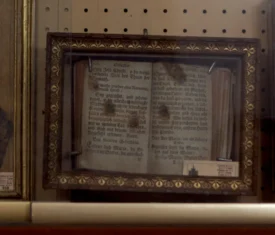
(Last time, I promised to follow up Ad Rem 89 with some concrete advice. This will come, God willing, but first something more timely for November.) Fingerprints burned into a prayer book. A clearly visible charred hand print on a … Continue reading →
Laudetur Iesus Christus! It can happen to anyone. You’re having a conversation; it ventures onto religious topics; you state some of the truth-claims of the Catholic Church. Then, unexpectedly, your interlocutor connects the dots and asks an alarmingly direct question. … Continue reading →

A priest I knew, who went to seminary in Rome, told me about an old professor that would introduce some thoughts with the words: “due parole…,” which means “two words” in Italian. The joke was that this old priest would … Continue reading →
The Thirteenth Annual Pilgrimage for Restoration is history. As usual, the 70-mile walk from The Lake of the Blessed Sacrament (a.k.a. “Lake George”) to the Shrine of the North American Martyrs in Auriesville, NY, was as grace-filled as it was … Continue reading →

Certainly now, we are not promoting an unlikely write-in campaign; neither do we think the Little Flower would accept if nominated or serve if elected. No, this is pure opportunism, in the best meaning of that term. In an election … Continue reading →

Visiting a nearby college recently, I picked up the campus newspaper to see what the students are reading nowadays. The front-page headline proclaimed that the dean of the college opposes lowering the legal drinking age from 21 back to 18. … Continue reading →
Reproduced below are about two pages of the thinking of Richard Weaver, the philosopher whose work we recommended in our third installment of the recent series on American culture. The subject of Weaver’s text: “the great stereopticon.” Borrowing the name … Continue reading →
Having stated the errors we hope to avoid and the goals we hope to accomplish, I would like to point out some good American traditions and cultural achievements upon which we hope to build. The categories I have chosen are … Continue reading →
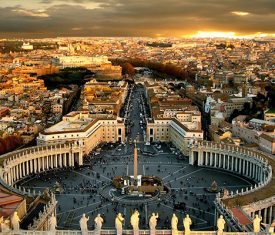
In this issue, we continue the thoughts we began in «Ad Rem» N° 81. Originally, I thought I could put down some worthwhile considerations on this topic in two editions of the Ad Rem, but I find that there is … Continue reading →
Mental pictures can help in illustrating an important point. The reader will excuse me, I hope, if I begin with a mental picture that is not the most pleasant.
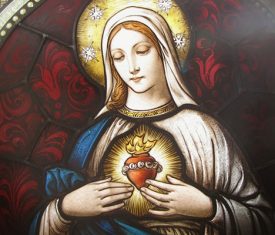
Our conference now recently behind us, we breathe a brief sigh of relief before IHM School’s annual Festival, followed by the new school year, and, for me, the commencement of some travel plans on behalf of our community’s apostolate. The … Continue reading →
Here at the monastery in Richmond, Dr. Maike Hickson, Joseph Topalian, and Third Order Prefect, Brother John Marie Vianney, M.I.C.M., Tert. gave very inspiring talks on their respective topics. Mrs. Hickson, with her husband and their new born, Isabella Maria, in the audience, whetted the listeners’ appetites for good Catholic literature. Mr. Topalian provided a fascinating tour of his own eventful life, filled with adventure and challenge, in the navy during World War II, in an eastern-rite seminary, and as a Catholic Armenian in America. Continue reading →
This week, two news items attracted my attention. It is hard not to see a connection between the two. The first details the persecution of a pro-life, pro-family priest in Canada. The second was further coverage of the recent Pew … Continue reading →


Site development: Bonaventure

