
On June 13, 1929, Sister Lucy of Fatima, while yet a Dorothean Sister, was privileged with a vision of the Most Holy Trinity. The vision happened in the convent chapel in Tuy, Spain. The Blessed Trinity appeared, with the Virgin … Continue reading
«Ad Rem» is our Prior’s fortnightly email message offering news and commentary regarding the Slaves of the Immaculate Heart of Mary, the Crusade of St. Benedict Center, and issues affecting the universal Church. Each number offers brief, ad rem (“to the point”) commentary on timely or otherwise important matters. Click here to subscribe to our email list and receive the «Ad Rem» each time it’s published.

On June 13, 1929, Sister Lucy of Fatima, while yet a Dorothean Sister, was privileged with a vision of the Most Holy Trinity. The vision happened in the convent chapel in Tuy, Spain. The Blessed Trinity appeared, with the Virgin … Continue reading →
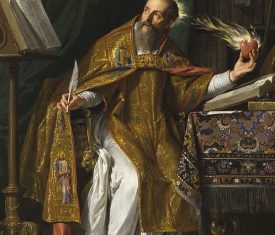
At the end of the Rule of St. Augustine, the Doctor of Grace — who was also a monk and father of monks — enjoins his disciples to observe its precepts “not like slaves under the law, but like freemen … Continue reading →
The book is written like a novel, but it is not one. It purports to be true history, written in the genre of a novel. Each chapter is a series of tableaux that form a miniature biography of a single family member. If the author set out to undo notions of the drab and colorless Middle Ages, his laudable goal was met with considerable success. For here we find ourselves in the world of chivalry and religious fervor, with personalities as colorful as their knightly heraldry and stained-glass windows. Continue reading →

We live in a hypereroticised culture. And it’s getting worse. Examples abound, but from the last fortnight or so of news, we can cite the controversy of a ten-year-old model posing provocatively in Vogue magazine, just like a “grown up,” … Continue reading →
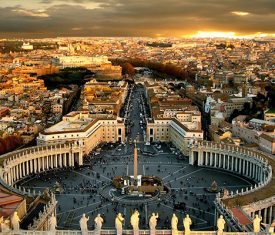
Readers may recall that Saint Benedict Center had been embroiled in litigation surrounding our chapel project that we so enthusiastically announced over six years ago. Yes, I said “had been.” The litigation is over, and we won. Now we have … Continue reading →

At our conference in October, the speakers will be considering the theme, “Right and Freedom: Catholic Considerations on Misused Concepts.” Here are some preparatory considerations on one part of our conference theme: freedom. These reflections, in no particular order, are … Continue reading →
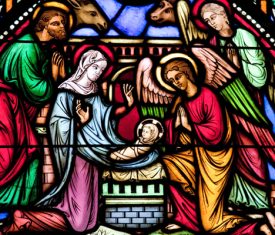
Those of us who gave up biological fatherhood to embrace the counsel of celibate chastity did so fully cognizant that we were giving up a good — and a great good — of standing in the place of God the … Continue reading →
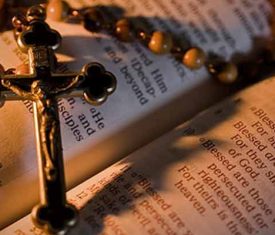
In Saint Paul’s account of the institution of the Holy Eucharist, the Apostle admonishes all who receive our Lord’s Body and Blood to examine their consciences, for “he that eateth and drinketh unworthily, eateth and drinketh judgment to himself, not … Continue reading →
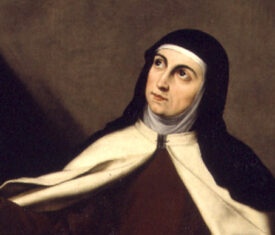
Have you heard the one about the Augustinian and the Carmelite? No, this is not a joke of the priest-minister-and-rabbi variety, but a true story about the profound influence of a little-known Augustinian nun on the life and vocation of … Continue reading →
In the book, Black Elk Speaks by John G. Neihardt, Americans were treated to a hefty dose of pagan American spirituality. Paul Harvey-like, I would venture to tell “the rest of the story.” In brief, it is this: the famed … Continue reading →
A truly great pope, worthy of the title “the Great,” which he has not yet officially been granted like Leo or Gregory, he knew how to handle the manifold crises in which the Church found herself in his day. Personally … Continue reading →
The feast of St. Louis Marie de Montfort coincides this year with Easter Wednesday. This liturgical concurrence provides us with an especially felicitous occasion for considering the sacrament of Baptism. Why? Let us recall two things at the very start. … Continue reading →

If the Church’s liturgical calendar were a temple of time consecrated to God, what we are fast approaching is that temple’s Holy of Holies. The Church sanctifies every week of the year, but only one, by virtue of excellence, does … Continue reading →
There is a lot of talk about the Pope’s new book. I have not read Volume II of Jesus of Nazareth, so I cannot and will not comment on it. Rather, I will use one short article about the book … Continue reading →
In medio stat virtus, or “virtue stands in the middle,” is a tried and true aphorism of the moral life. It means that the correct way of virtue avoids the errors of excess on the one hand and defect on … Continue reading →


Site development: Bonaventure

