

Hélène de Lauzun, the Paris correspondent for The European Conservative, tells her readers about Archbishop Guy de Kerimel’s reaction to a publicly funded street show in Toulouse that sports satanic themes. His Grace has consecrated the city to the Sacred Heart of Jesus.
Below is an AI-produced summary of the article: 1
- The Archbishop of Toulouse dedicates the city to the Sacred Heart of Jesus, protesting a publicly funded street show with satanic themes.
- The show, featuring a machine named Lilith, depicts a half-woman, half-scorpion with satanic imagery, originally made for the Hellfest festival in Brittany.
- “The Gates of Darkness” parade in Toulouse, set from October 25th to 27th, previously drew 800,000 spectators in 2018.
- Lilith, from Mesopotamian mythology and later feminist interpretations, is controversial for its satanic and dark symbolism.
- Local Catholic leaders, including Archbishop Msgr. Guy de Kerimel, oppose the display, urging a spiritual response by dedicating the city to the Sacred Heart during a Mass on October 16th.
- De Kerimel critiques the cultural climate, emphasizing hope amidst societal fragmentation while Delarozière, Lilith’s creator, dismisses these concerns as puritanical.
- Father Simon d’Artigue highlights the troubling presence of satanic symbols in public areas.
- The Archbishop’s consecration is seen as an alternative vision of hope, not magical protection, contrasting a fascination with darkness as embodied by the show.
- Younger churchgoers appreciate the Archbishop’s stance, valuing the dedication as a display of divine love amid criticism of narrow-mindedness.
Read the article at The European Conservative…
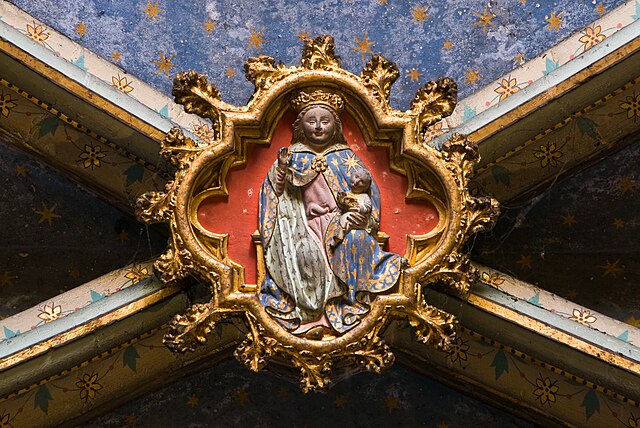
Vault keystone of an apse chapel (Toulouse Cathedral, France). Image credit: Pom², CC BY-SA 3.0, via Wikimedia Commons.
- All AI-produced content on Catholicism.org is clearly marked as such and is reviewed, edited, and, if necessary, corrected, by a human editor before publication (policy implemented Oct. 15, 2024). ↩



