

A good friend referred me to this excellent piece by John Horvat on the Return to Order website: “How Gregorian Chant Benefits the Health of the Body…and Soul.”
Horvat’s is a cautionary tale about what happens when tradition is abandoned. It is also a story of redemption that reveals the benfits resulting from restoring ancient tradition. The account is backed up by medical science in the person of a specialist who observed the ill effects of abandoning, followed by the good effects of restoring, a certain traditional monastic practice in one monastery in France.
Fifteen years ago, after pondering the benefits of restoring various abandoned traditions to different aspects of our lives, I concluded that there is an inescapable truth we might adopt as a canon, or rule in such matters: “Tradition is Good for You.”
Consider the following a case in point:
French author, Dr. Alftred Tomatis, tells the fascinating story of how he discovered the “secret” of the monks’ vigor amid their rigorous schedule.
Dr. Tomatis, an ear specialist, recounts how a particular French monastery had followed St. Benedict’s rule for centuries, which entailed several hours of chant a day.
After the Second Vatican Council in the sixties, the monks changed their centuries-old practices. They stopped chanting in Latin and explored the possibility of continuing their chant in the vernacular. When no agreement was reached on how to do this, they decided to stop chanting altogether and replace it with more updated and perhaps more “pastoral” ministries in line with the reforms.
The new schedule had major consequences on the lives of the monks. For centuries, Benedictines have thrived with little sleep. These monks now became fatigued and listless. Even when given more hours of sleep, they continued to be constantly tired. [The “story of redemption” follows…]
Read the rest at Return to Order…
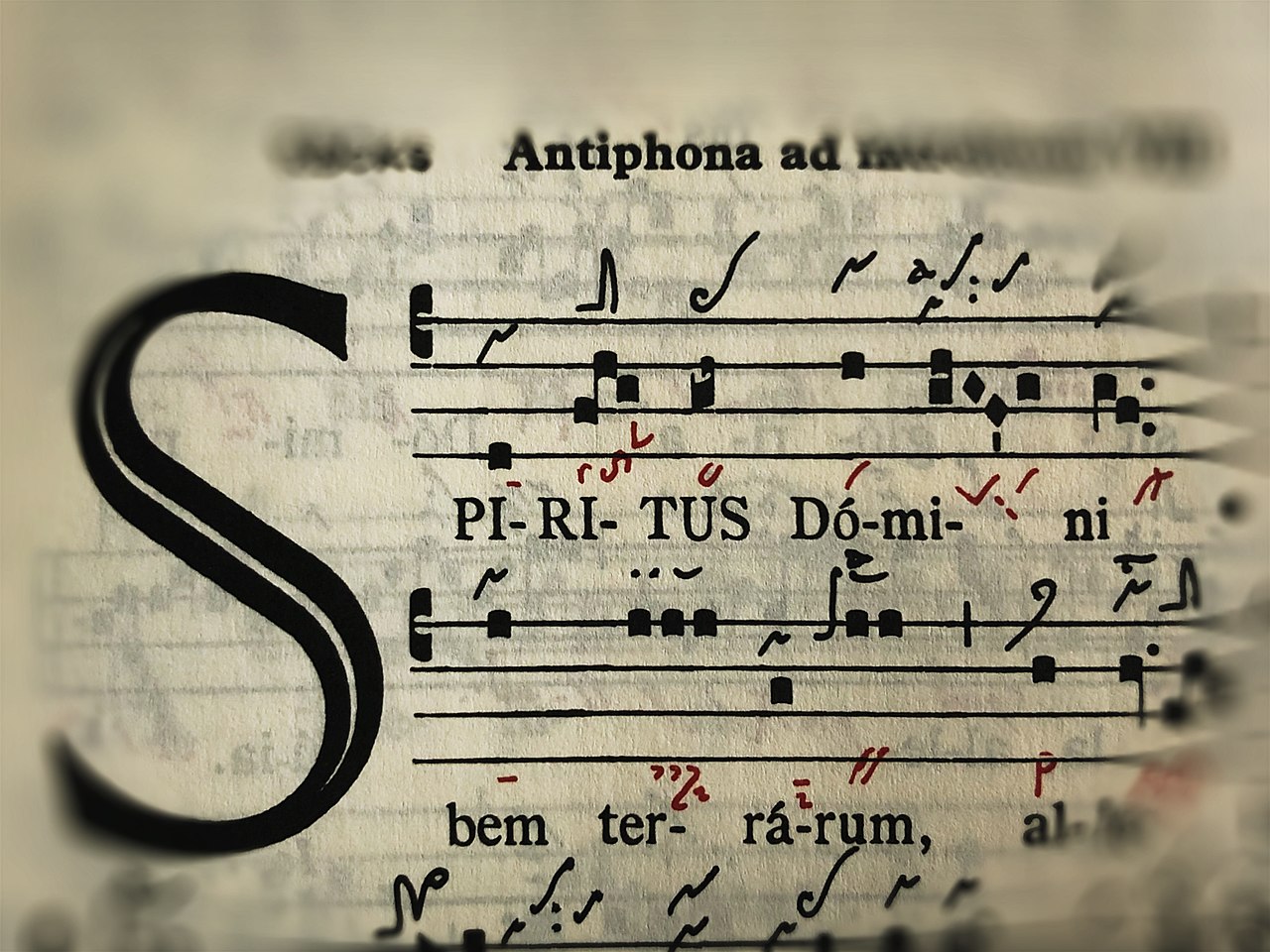
Incipit of the introitus Spiritus Domini. Photo by Amalarius Metensis, CC BY-SA 4.0, via Wikimedia Commons.



