

Who, and What, do we expect to come to us when our Advent is over? To put the question in His own words, “Whom [and What] do men say that the Son of man is?” (Matt. 16:13). Protestants often ask … Continue reading

«Ad Rem» is our Prior’s fortnightly email message offering news and commentary regarding the Slaves of the Immaculate Heart of Mary, the Crusade of St. Benedict Center, and issues affecting the universal Church. Each number offers brief, ad rem (“to the point”) commentary on timely or otherwise important matters. Click here to subscribe to our email list and receive the «Ad Rem» each time it’s published.

Who, and What, do we expect to come to us when our Advent is over? To put the question in His own words, “Whom [and What] do men say that the Son of man is?” (Matt. 16:13). Protestants often ask … Continue reading →

Charles Dickens was a great literary genius. He had a gift for complicated plots, for colorful characters, and for emotionally evocative storytelling. As a social critic, he also penetrated into the unseemlier side of industrial capitalism, that Protestant beast that … Continue reading →
The question that gives me the title for this piece is one I was recently asked, and was glad to answer, for it had occurred to me before, and provided me with some gratifying meditations both on gratitude (thanksgiving) and … Continue reading →
This past weekend, Brother Joseph and I were at the Catholic Identity Conference in Weirton, West Virginia. This is the conference which has been described as a traditionalist “unite-the-clans” event. In that regard, as in many others, it did not … Continue reading →
Not long ago, I was in an online controversy with a young woman who objected to something I wrote. We went back and forth a bit, but the discussion went nowhere fast. She was defending positions diametrically opposed to the … Continue reading →
This Ad Rem is a “teaser.” It’s a section of the talk I will give in a couple of days at the Saint Benedict Center Conference. (If you are not coming, feel free to pre-order the CD’s and DVD’s of … Continue reading →
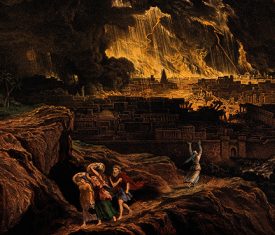
The news keeps coming fast and furious. Some recent samples: While a prominent and highly favored pro-homosexual Jesuit attacks faithful Catholics as “unorthodox” for opposing the sodomite agenda, a priest who opposes that same agenda is hounded by his Archbishop … Continue reading →
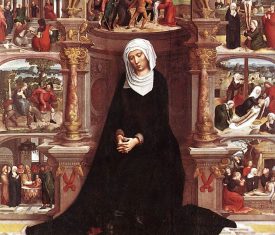
The recent revelations of depraved deeds committed by bishops and priests are evocative of different appropriate emotions. Anger would be the first of these. It is the irascible passion we experience in the presence of an evil we strive to … Continue reading →
Justice, in its most foundational meaning, is “rendering to the other what is his due.” When the “other” is a fellow man or the State, there are three specific parts of justice that pertain: commutative justice, distributive justice, and legal … Continue reading →
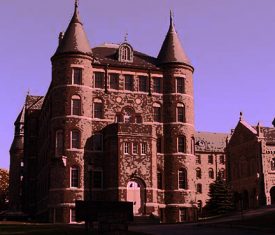
It is not my custom to write about the latest scandal. There are good reasons for this. The world is fallen and scandals abound, even in the best of times. To dwell on them risks losing sight of the good … Continue reading →
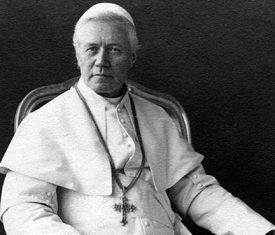
Plato said that God is thought thinking thought. As Father Leonard Feeney wrote, this is about as close as a philosopher can get to the knowledge of the Holy Trinity with his unaided intellect, and it is a loose approximation … Continue reading →
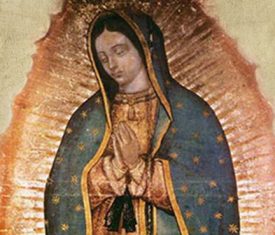
In the film For Greater Glory, there is a dialogue between Mexico’s Freemasonic head of state, Plutarco Calles and the American Ambassador, Dwight Morrow. Morrow is diplomatically attempting to convince Calles of the wisdom of ending the persecution of the … Continue reading →
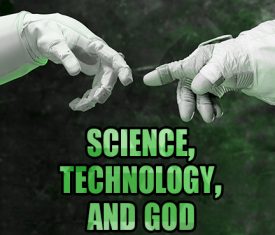
One of the two major reasons that people become atheists is that secondary causality is, so they think, sufficient to explain all that exists without any reference to God. This and the existence of evil are the two objections to … Continue reading →
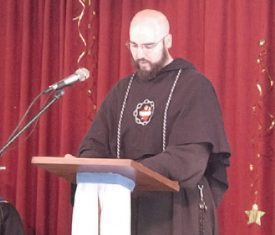
This is a speech I gave at IHM School’s recent graduation. Besides being the auspicious occasion of Juliana’s graduation from IHM School, today is also Father’s Day. This is a secular observance that, here in the United States, began in … Continue reading →

What Oliver Cromwell could not do, what an Gorta Mór (the Great Hunger) could not do, what hundreds of years of Anglo-Protestant persecution could not do to the Irish Catholic people — namely, rob them of their faith and morals … Continue reading →


Site development: Bonaventure

