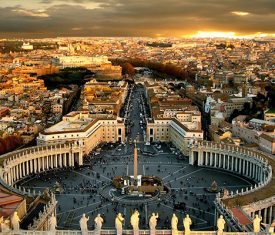
Recently, on two separate occasions, I discussed our apostolate with a couple of members of the media. One had something of a grasp of our community’s purpose. The other was far less aware and seemed swayed by some of the … Continue reading

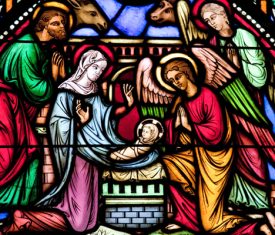
It is well known that J.R.R. Tolkien, the celebrated fantasy writer who gave us The Hobbit and The Lord of the Rings, was a Catholic. He was not a writer who just happened to be also a Catholic; he was … Continue reading
“Ensoulment” is the word which describes the point at which the body of the conceptus is said to be informed by a human soul. (The notion of a living being having “no soul” is a philosophical oxymoron, since the soul … Continue reading
On September 14, 1952, Pope Pius XII gave an address to the First International Congress on the Histopathology of the Nervous System. On that occasion, the Holy Father discussed the Principle of Totality at length and in the contrasting terms … Continue reading
Sometimes the same act causes both a good result and an evil result at the same time. The question for the moralist is “Should such an act be performed?”
The natural law tradition as explicated by Saint Thomas Aquinas is foundational for Catholic medical ethics. Here is a very brief description of the Natural Law theory of Thomas Aquinas as it affects that field of moral theology.
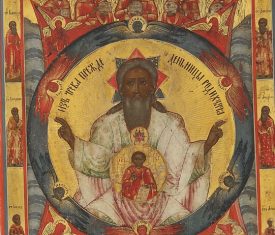
The eternal processions in the Blessed Trinity – the Son’s generation from the Father and the Holy Ghost’s spiration from the Father and the Son – are reflected in creation in the temporal missions of the Son and the Holy … Continue reading
Today, September 14, 2007, Pope Benedict XVI’s motu proprio, Summorum Pontificum, has the effect of law. We once again want to express our gratitude to the Holy Father for reviving Catholic liturgical tradition for the good of the Church.
The last three posts were all on Modernism, or subjects closely related to Modernism. This is my (slightly belated) celebration of the 100th anniversary of Pascendi Dominici Gregis, Pope St. Pius X’s wonderful encyclical condemning that heresy.
The eighteenth-century Enlightenment mounted a severe offensive against the Church, one which combined various malignant cultural and intellectual trends that had gradually come into ascendancy since the Renaissance. “For the most part, the Church did not respond to this attack … Continue reading
It would be a gross oversimplification to put an equal sign between the words “Americanism” and “Modernism,” as if the former were merely the American embodiment of the latter. However, while we must avoid this facile identification of the two, … Continue reading
This phrase – “the synthesis of all heresies” – shows up toward the end of the Encyclical Pascendi Dominici Gregis, placed in the context of a rhetorical question.[1] After an apology for taking so long to explore the entire scope … Continue reading


Site development: Bonaventure