
In the movie “Master and Commander,” Rear Admiral Sir John Aubrey (played by Russell Crowe) pretends to ask one of his officers a difficult question. He inquires which of two weevils that have appeared on the ship’s table would be … Continue reading
In the movie “Master and Commander,” Rear Admiral Sir John Aubrey (played by Russell Crowe) pretends to ask one of his officers a difficult question. He inquires which of two weevils that have appeared on the ship’s table would be … Continue reading
Under the headline “Russian Orthodox prelate welcomes return of Latin Mass,” Catholic World News ran a report on Patriarch Alexei II’s positive reception on Pope Benedict’s motu proprio giving more freedom to the ceremonies of the Classical Roman Rite. Summorum … Continue reading
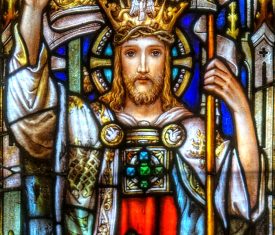
The assignment: Write a three page paper responding to the following questions. How can the finite man Jesus be the fullness of divine revelation? How can the finite Roman Catholic Church transmit the fullness of divine revelation? Include reference to … Continue reading
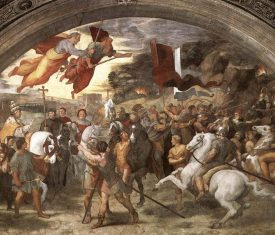
Virtue is nothing without the trial of temptation, for there is no conflict without an enemy, no victory without strife. (Pope St. Leo the Great) Attila, the great Khan of the Huns, trained his mobile soldiers to sleep on their … Continue reading
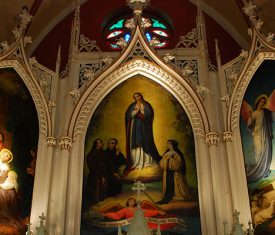
Gary Potter is deeply read on the Church’s traditional social teaching. He has spoken and written extensively on the Social Kingship of Our Lord Jesus Christ.
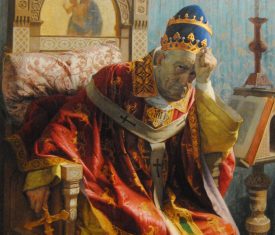
A Review of The Church at the Turning Points of History, by Godfrey Kurth. Paperback: 160 pages Publisher: IHS Press (September 1, 2007) ISBN-10: 1932528091 ISBN-13: 978-1932528091 History is the laboratory of wisdom, says my mentor. But for all the … Continue reading

Much of history since the seventh century has been shaped by an unending conflict between the One True Church and Islam. Today’s Church having fallen into a sorry state with many of her members no longer understanding that they belong … Continue reading
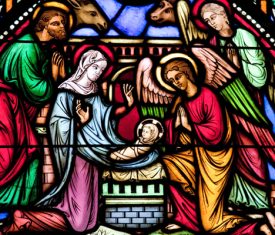
The Edict of Nantes was a pragmatic, political solution to the civil strife that existed in a sixteenth-century France ravaged by wars of religion. Though the edict itself was not trusted, appreciated, or liked by most Frenchmen at the time, … Continue reading
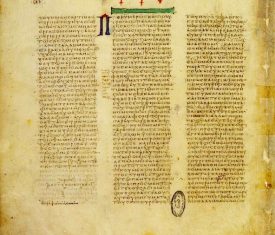
We often hear the question asked, sometimes even by the well-instructed: “Is it safe to read the Bible?” The answer, of course, is: “Yes, certainly; the Church blesses and encourages the habitual reading of Holy Scripture by all the faithful.” … Continue reading
I have finished reading the wonderful volume of Godfrey Kurth, The Church at the Turning Points of History, now happily brought back into print by my friends at IHS Press. This accomplished author is not so well known as he … Continue reading
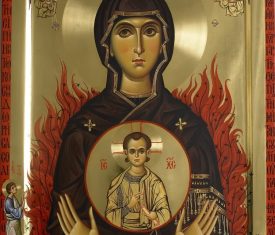
One of the most effective means by which Holy Church exercises her office of teaching is the institution of feasts in the liturgical year. During the seasons of Christmas, Easter, and Pentecost, to mention only three prominent examples, the whole … Continue reading
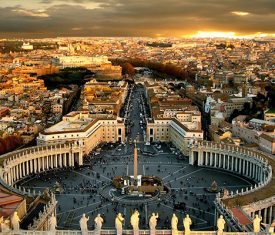
One of the striking triumphs of God in our difficult world is the recurring miracle of Christmas. Once a year the whole of mankind, believers and unbelievers, must think of an event from which all history before and after is … Continue reading
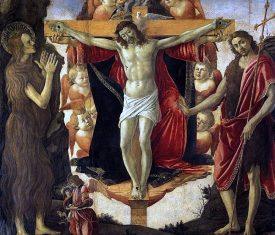
This paper summarizes Catholic teaching on the procession of the Son from the Father, and of the Holy Spirit from the Father and the Son. Given that the Son and the Holy Ghost are consubstantial with the Father, that is, … Continue reading
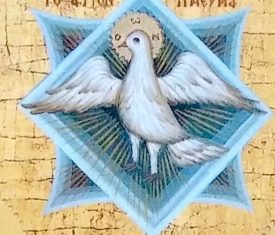
One of the doctrinal controversies between the schismatic, so-called Orthodox churches of the East and the Catholic Church is a dogma expressed in one word: Filioque (Fee-lee-OH-kway). But what does this word mean? Filioque is Latin for “and the Son.” … Continue reading
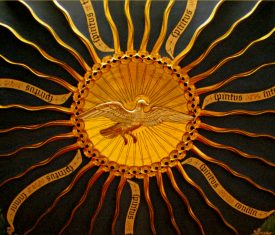
The following is from Blessed Columba Marmion’s masterful Christ, the Life of the Soul. In the larger context, Abbot Marmion is considering the mystery of holiness, first in God, then in men. After speaking of holiness considered as an attribute … Continue reading


Site development: Bonaventure

