
Theodore Herzl (1860-1904), one of the pioneers of Zionism, had the distinction of winning Western Jews and European leaders to the cause of a Jewish state in Palestine. Toward the end of his career, he met with, among others, the … Continue reading
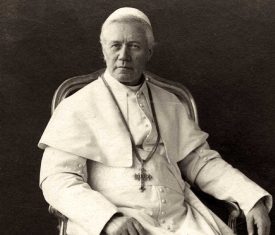
Theodore Herzl (1860-1904), one of the pioneers of Zionism, had the distinction of winning Western Jews and European leaders to the cause of a Jewish state in Palestine. Toward the end of his career, he met with, among others, the … Continue reading
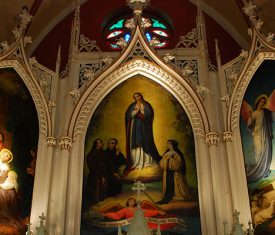
We English-speaking American Catholics often overlook (or are ignorant of) the accomplishments of our non-English-speaking Catholic forerunners on this continent. One such forerunner, who should be a household name to American Catholics, is St. Philip of Jesus. In 1597 — … Continue reading
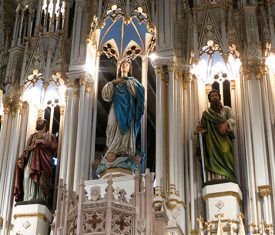
The success of the First Crusade (1095-1101) brought with it the creation of the Latin Kingdom of Jerusalem, with Lord Godfrey of Bouillon as its first monarch. After Godfrey’s death, the barons invited his brother, Baldwin of Edessa, to rule, … Continue reading
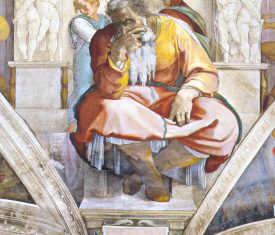
The word jeremiad, meaning “a prolonged lamentation or complaint,” also, “a cautionary or angry harangue” (Merriam-Webster’s online dictionary), has its origin in the name of the Prophet Jeremias (Jeremiah). The word comes to us from the French jérémiade, which, in … Continue reading
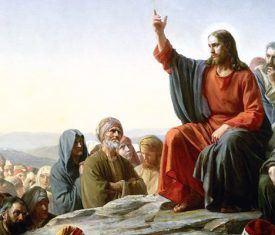
Everyone’s heard the expression, “When in Rome, do as the Romans do.” Few, however, know that the adage owes its origin to two doctors of the Church: St. Ambrose and Saint Augustine. In the thirty-sixth of his catalogued Epistles, St. … Continue reading
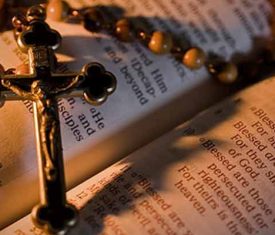
The word scruple is defined by Webster’s as “an ethical consideration or principle that inhibits action.” The word came into English via the Middle English word scriple, from the Latin scrupulus , a unit of weight. Scrupulus was, in turn, … Continue reading
Leave it to a poor man to figure out how to handle money properly. The man with the august title, “Father of Accounting,” was a Franciscan Friar named Luca Pacioli (1445-1517). Born of poor parents in Sansepulcro, Tuscany, he entered … Continue reading
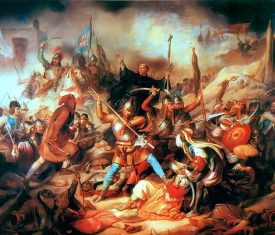
What do these two have to do with each other: one, a battle fought in 1456 against Moslem invaders and the other, the mystery of Our Lord’s manifesting His glory to three of His Apostles on Mount Tabor? On July … Continue reading
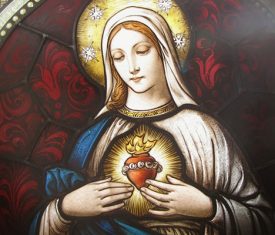
The Talmud, which is well known to contain many blasphemies against Our Lord and Our Lady, is an odd mixture of authentic Israelite tradition and the damnable “tradition of men . . . making void the word of God” which … Continue reading
Last year was the 700th anniversary of St. Ives, patron saint of lawyers. On May 19, 1303, Ivo Helory entered Heaven. Now known as St. Ivo, St. Yves, or St. Ives, he was a French Franciscan lawyer who often defended … Continue reading
One of the major relics of the Passion of Our Lord is the Holy Lance of Saint Longinus. While many of the faithful are familiar with the story of Saint Helen and the finding of the True Cross, that of … Continue reading
We have two saints in Washington DC. Well, not exactly. What we do have is the statue of two blesseds in the Capitol building. Who might they be, you may wonder? Blessed Junipero Serra, founder of the California missions, is … Continue reading
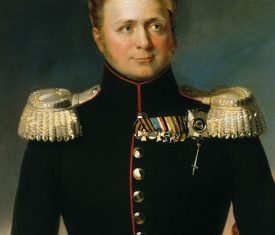
Just before he died in 1825, Alexander I, Emperor of Russia, was converted to the Catholic Faith. A Catholic aide-de-camp of the Tsar, General Michaud, had heard a vague rumor of Alexander’s death while he was in Rome at the … Continue reading
During the Second World War, a Catholic Philippine hero, General Manuel Roxas, was captured by the Japanese, sentenced to death, and led out to a secret place to be executed. General Roxas was one of the leaders of the Filipino … Continue reading
Hermann Cohen (1820-1871) was a child prodigy who, at the age of 13, was dazzling Parisian audiences with his stunning virtuosity. A star pupil of virtuoso and composer Franz Liszt (1811-1886), he lamentably learned more from him than piano playing. … Continue reading


Site development: Bonaventure

