As I write this, it is the Feast of the Holy Family, the first Sunday after the Epiphany. On this day, the Church celebrates Jesus, Mary, and Joseph, the human holy trinity that perfectly images the divine Holy Trinity. In … Continue reading
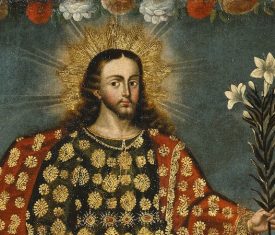
As I write this, it is the Feast of the Holy Family, the first Sunday after the Epiphany. On this day, the Church celebrates Jesus, Mary, and Joseph, the human holy trinity that perfectly images the divine Holy Trinity. In … Continue reading
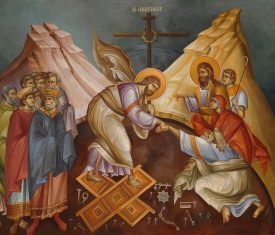
While I was preparing to receive the sacrament of Confirmation, I was asked to memorize the Ten Commandments and the Six Precepts of the Church; included in those Six Precepts was the command “to assist at Mass on all Sundays … Continue reading
The Fathers of the Synod of Bishops on "the Word of God" finally decided last Friday not to take a piece of heterodox ‘bait’ that had been slipped into their Instrumentum Laboris . The IL was the working document prepared for the Synod by elite biblical scholars … Continue reading
On September 24, 1989, there appeared an extremely interesting article in the magazine section of the New York Times entitled “Cold Fusion Confusion,” written by two physicists from the Brookhaven National Laboratory, Robert P. Crease and N.P. Samios. It examined … Continue reading
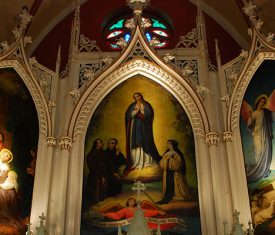
The following extract from the Catechism on Catholic Doctrine, written by the renowned Scottish Bishop, George Hay (1729-1811), is presented for you as a testimony to the Faith of the centuries. A convert from Episcopalianism, Bishop Hay understood, far better … Continue reading
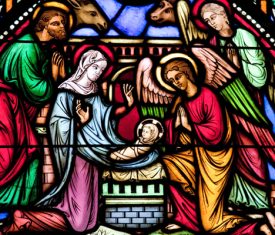
I copy here an entry from the Catholicism.org News Portal because it brings up the moral issue of NFP, but first, a few more general thoughts on the subject: NFP, or Natural Family Planning, is a more scientific version of … Continue reading
Father Chad Ripperger’s sermon on NFP (MP3) is one of the most intelligent things I’ve yet heard on this much-discussed subject. This is highly recommended for married couples.
I will be traveling soon. What will have me on the road is the “Catholic America Tour” (CAT). I will be traveling across our land to lecture on the subject, “Toward a Catholic America: History, Goals, and Methods.” If you … Continue reading
“Sentimental Theology Revisited” is an article published in issue #32 of From the Housetops (this issue is unfortunately out of print), discussing Brother Francis’ article, “Sentimental Theology” and its significance to the Crusade of Saint Benedict Center.

I was asked by a friend to write something explaining the four meanings of Holy Scripture as taught by St. Thomas: namely, the historical (or literal), the allegorical, the tropological (or moral), and the anagogical. I am glad to comply … Continue reading
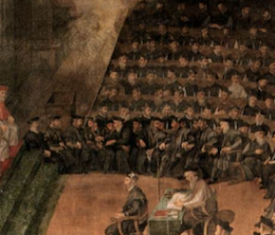
LOYAL ROMAN CATHOLICS are familiar with Pope Saint Pius V’s Bull Quo Primum, but many are not aware that this same great pope brought forth under the direction of The Council of Trent an authoritative Catechism that was to have … Continue reading
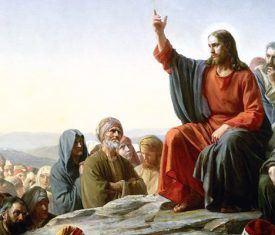
“For there is one God, and One Mediator of God and men, the man Christ Jesus.” (1 Tim. 2:5) In the minds of Protestant apologists, these words of St. Paul are the ultimate “talisman,” a charm which is supposed to “protect” Bible-believing Christians from … Continue reading


Site development: Bonaventure