

The last three posts were all on Modernism, or subjects closely related to Modernism. This is my (slightly belated) celebration of the 100th anniversary of Pascendi Dominici Gregis, Pope St. Pius X’s wonderful encyclical condemning that heresy.
The last three posts were all on Modernism, or subjects closely related to Modernism. This is my (slightly belated) celebration of the 100th anniversary of Pascendi Dominici Gregis, Pope St. Pius X’s wonderful encyclical condemning that heresy.
The eighteenth-century Enlightenment mounted a severe offensive against the Church, one which combined various malignant cultural and intellectual trends that had gradually come into ascendancy since the Renaissance. “For the most part, the Church did not respond to this attack … Continue reading
It would be a gross oversimplification to put an equal sign between the words “Americanism” and “Modernism,” as if the former were merely the American embodiment of the latter. However, while we must avoid this facile identification of the two, … Continue reading
This phrase – “the synthesis of all heresies” – shows up toward the end of the Encyclical Pascendi Dominici Gregis, placed in the context of a rhetorical question.[1] After an apology for taking so long to explore the entire scope … Continue reading
The Catholic historian, A. Dufourcq, called the papacy of 1447 to 1527, la papauté princière, “the papacy of princes.”[1] This trenchant appellation conveys Fr. Maurice Sheehan’s meaning when he says “these popes were more men of culture or rulers than … Continue reading
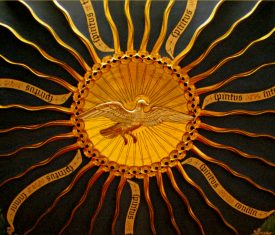
The gifts of the Holy Ghost resemble the infused virtues in a number of ways. Both are operative habits which have God as their efficient cause and the perfection of man as their final cause. Both reside in the human … Continue reading
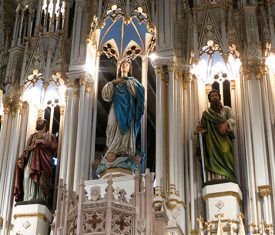
Given the general decline in public morals, and given the fact that, as an institution, the major promoter of the natural law is the Catholic Church, some are led to conclude that the natural law is a “Catholic thing,” or … Continue reading
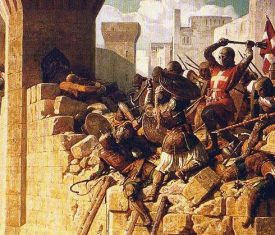
The three parts of a moral act: object, intention, and circumstances. I was instructed to explain them in terms of three scenarios. I had a little fun. Here was the assignment: “Albert kills Ernest. Describe three different imaginary situations based … Continue reading
This is the final installment of our review of Abbot Gabriel’s book. The “Regularization.” When Abbot Gabriel told me that there would be things Brother Francis would not agree with in his book, I assumed that these would be matters … Continue reading
In the last edition, I mentioned that my review of Abbot Gabriel’s book would cover both its positive and its negative aspects. I also mentioned that, should the parts we view as less favorable get more attention, it is not … Continue reading
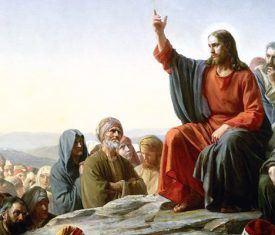
The Abbot of St. Benedict Abbey in Still River has made an important contribution to the historical literature on Father Feeney and his Crusade. Abbot Gabriel Gibbs, O.S.B., one of the early members of the Slaves of the Immaculate Heart … Continue reading
Videtur etiam Ecclesiam catholicam inter illas Communiones comprehendi, quod falsum esset. Don’t get it?
The gifts of the Holy Ghost resemble the infused virtues in a number of ways. Both are operative habits which have God as their efficient cause and the perfection of man as their final cause.
This article is from the English Weekly Edition of L’Osservatore Romano : N. 27 — 2 July 1990 — Page 5.1 It takes up nearly all of that page, with only a few “News briefs” at the bottom.


Site development: Bonaventure

